

Epaphras, who is one of you, a servant of Christ Jesus, greets you, always struggling on your behalf in his prayers, that you may stand mature and fully assured in all the will of God. (Colossians 4:12)
This verse speaks of "struggling in prayer."
Have you (or I) done that lately? Do you (or I) understand what it means?
A related question is, should I be on the computer right now - or learning the answer to these questions?
Showing posts with label Christian Growth. Show all posts
Showing posts with label Christian Growth. Show all posts
Saturday, August 2, 2008


Tuesday, July 15, 2008
Surpassing Worth

Often when we see something of value, we want to obtain it. Usually, we want to obtain it - whatever it may be - to add it to our treasures. Big companies want to obtain the smaller ones, so their resources can grow bigger. Children want the newest toy to add to their already vast collection. Pastors want the next book to set on the shelf alongside the other gently used (meaning "partially read") books.
But there is such a thing as a treasure that we obtain that cannot be added to our already overflowing collection:
"But whatever gain I had, I counted loss for the sake of Christ. Indeed, I count everything a loss because of the surpassing worth of knowing Christ Jesus my Lord. For his sake I have suffered the loss of all things and count them as rubbish..." Philippians 3:7-8a
Paul realized that gaining Christ meant losing everything else. In context, Paul is saying that he once based his worth on a host of accomplishments; but these were a bad joke in light of Christ's accomplishments, and he had to choose one or the other. With eyes wide open to the value of Jesus Christ in the eyes of God the Father, he wisely chose Christ - so that in the final day he would be prepared to stand before God.
To paraphrase a friend, Jesus cannot have a place among our pantheon of gods. He cannot even have prominence, as chief among our gods. He must have preeminence: this means that he must be, as Paul said above, Lord.
Paul does not say "the surpassing worth of knowing Christ Jesus my Savior," although that would be absolutely true also. He certainly does not say "Christ Jesus my ticket to heaven." He says that knowing Jesus as Lord is the surpassing worth. In other words, I would rather follow and obey Jesus than follow myself and obey my own appetites.
Can I say the same thing?
Sunday, July 13, 2008
Prayer for the Fatigued
Perhaps you feel fatigued because you have served the Lord with your whole being, prayerfully and joyfully, and now it's time to rest in Him for a while. Or perhaps, like me, you find yourself fatigued because your service to Him has been too often accompanied by prayer but has not actually been the result of prayer. If you fall into this later camp, perhaps the following prayer may help you as it helped me:
Lord Jesus, whom I follow --
I am sorry, and I repent of my ways,
Which obscure your ways.
I repent of the self-sufficiency so embedded within me -
And of the prayerlessness, restlessness, busyness, and fatigue
That are its consequence.
I repent because I have not honored Your ways by drawing from Your strength.
I repent because I want Your ways to be known in the earth, not my own ways.
And in honesty I acknowledge that I repent because I know that I desperately need the fruits of this repentance.
Please receive me back as Your follower,
Though I have sought to lead the way.
Please deliver me from self-sufficiency and its fruit,
And cause me to know the gladness of service once again.
Whatever I have built with my own hands --
Tear down in Your jealousy
Or redeem in Your mercy
Either way, I praise You, O Lord,
For your gracious forgiveness and cleansing
Because of the shed blood of Calvary.
Lord Jesus, whom I follow --
I am sorry, and I repent of my ways,
Which obscure your ways.
I repent of the self-sufficiency so embedded within me -
And of the prayerlessness, restlessness, busyness, and fatigue
That are its consequence.
I repent because I have not honored Your ways by drawing from Your strength.
I repent because I want Your ways to be known in the earth, not my own ways.
And in honesty I acknowledge that I repent because I know that I desperately need the fruits of this repentance.
Please receive me back as Your follower,
Though I have sought to lead the way.
Please deliver me from self-sufficiency and its fruit,
And cause me to know the gladness of service once again.
Whatever I have built with my own hands --
Tear down in Your jealousy
Or redeem in Your mercy
Either way, I praise You, O Lord,
For your gracious forgiveness and cleansing
Because of the shed blood of Calvary.
Saturday, June 14, 2008
Prudent or Shameful?
Have you ever put these two verses together?
Do you not say, 'There are yet four months, then comes the harvest'? Look, I tell you, lift up your eyes, and see that the fields are white for harvest. John 4:35
He who gathers in summer is a prudent son, but he who sleeps in harvest is a son who brings shame. Proverbs 10:5
This hit me hard on the airplane yesterday. There is a spiritual harvest: Opportunity all around us to share our faith and lives with others, in a way that draws others to Jesus Christ. Proverbs 10:5 says some recognize this and "gather," while others choose to sleep.
What would make us sleep? Well, what makes a shameful son sleep while the rest of the family goes out to work? Thoughts such as, "I have all I need" or "The work is too hard." Let the work be done for us, but please don't make me work!
Proverbs calls this line of reasoning shameful. I pray that the Lord will help me to labor hard for the gospel. Though the work is the Lord's in one sense, we are called to it - like sons working alongside their father. Will we be shameful sons, or prudent sons?
* * *
NOTE: Having been away during the week at the PCA's General Assembly, I'll post on our Jerry Bridges book next week. We'll be wrapping it up next week and then... well, we'll see.
Do you not say, 'There are yet four months, then comes the harvest'? Look, I tell you, lift up your eyes, and see that the fields are white for harvest. John 4:35
He who gathers in summer is a prudent son, but he who sleeps in harvest is a son who brings shame. Proverbs 10:5
This hit me hard on the airplane yesterday. There is a spiritual harvest: Opportunity all around us to share our faith and lives with others, in a way that draws others to Jesus Christ. Proverbs 10:5 says some recognize this and "gather," while others choose to sleep.
What would make us sleep? Well, what makes a shameful son sleep while the rest of the family goes out to work? Thoughts such as, "I have all I need" or "The work is too hard." Let the work be done for us, but please don't make me work!
Proverbs calls this line of reasoning shameful. I pray that the Lord will help me to labor hard for the gospel. Though the work is the Lord's in one sense, we are called to it - like sons working alongside their father. Will we be shameful sons, or prudent sons?
* * *
NOTE: Having been away during the week at the PCA's General Assembly, I'll post on our Jerry Bridges book next week. We'll be wrapping it up next week and then... well, we'll see.
Tuesday, April 29, 2008
An Appeal to the Working Class
The Christian life consists of worship and work. If you read through the book of Ephesians, you'll see that it divides fairly evenly between what God has done for us (resulting in praise) and how we should therefore live.
If you've been a Christian for a while, perhaps you have grown increasingly mindful of your responsibilities before God. Or perhaps you are what used to be called a "Christian worker" - someone engaged in formal or informal ministry, seeking to help others with the gospel. If so, perhaps you have noticed how easy it is for work to squeeze out worship.
I thought about this on Saturday, as I prepared to preach the following day. In fact, I can be more honest than that. I thought about this on Saturday, as I lost all energy to prepare my sermon for the following day because I was burned out! I didn't want to study and I didn't want to pray. And the reason, I am convinced, is that Christ work had squeezed out worship.
When I realized this, I stopped feeling guilty that I had no desire to prepare my sermon and I simply allowed myself some spiritual breathing space. As I was able to set my mind on God in quiet worship - as I mowed the lawn, dug out some tree stumps, played with my son, and walked the dogs - I was gradually refreshed and energized.
This train of thought led me to remember how, in the Old Testament, the worship leaders went out in front of the army:
[The king] appointed those who were to sing to the LORD and praise him in holy attire, as they went before the army, and say, "Give thanks to the LORD, for his steadfast love endures forever." (2 Chronicles 20:21)
It seems quite odd to put the worship leaders in front of the army (unless you really, really don't like the direction of the music at your church!). You would think the swordsmen or calvary would be up front, and perhaps some praise might waft in from the rear. But no, God put the priority on worship.
Our walk with God involves worship and work. We'll never work well, or battle well, if we don't worship well.
If you've been a Christian for a while, perhaps you have grown increasingly mindful of your responsibilities before God. Or perhaps you are what used to be called a "Christian worker" - someone engaged in formal or informal ministry, seeking to help others with the gospel. If so, perhaps you have noticed how easy it is for work to squeeze out worship.
I thought about this on Saturday, as I prepared to preach the following day. In fact, I can be more honest than that. I thought about this on Saturday, as I lost all energy to prepare my sermon for the following day because I was burned out! I didn't want to study and I didn't want to pray. And the reason, I am convinced, is that Christ work had squeezed out worship.
When I realized this, I stopped feeling guilty that I had no desire to prepare my sermon and I simply allowed myself some spiritual breathing space. As I was able to set my mind on God in quiet worship - as I mowed the lawn, dug out some tree stumps, played with my son, and walked the dogs - I was gradually refreshed and energized.
This train of thought led me to remember how, in the Old Testament, the worship leaders went out in front of the army:
[The king] appointed those who were to sing to the LORD and praise him in holy attire, as they went before the army, and say, "Give thanks to the LORD, for his steadfast love endures forever." (2 Chronicles 20:21)
It seems quite odd to put the worship leaders in front of the army (unless you really, really don't like the direction of the music at your church!). You would think the swordsmen or calvary would be up front, and perhaps some praise might waft in from the rear. But no, God put the priority on worship.
Our walk with God involves worship and work. We'll never work well, or battle well, if we don't worship well.
Wednesday, April 9, 2008
Respectable Sins: Registering Our Complaints
In the third chapter of Respectable Sins, Jerry Bridges discusses "the malignancy of sin." He compares sin to a cancer that spreads deep and wide if not treated. For example, Bridges gives an example of how easily sin spreads through our speech:
If I gossip, I both tear down another person and corrupt the mind of my listener. If I complain about the difficult circumstances of my life, I impugn the sovereignty and goodness of God and tempt my listener to do the same. In this way, my sin "metastasizes" into the heart of another person. (p.24)
This is an example of a "respectable sin." It is so easy, and so culturally acceptable, to complain. Yet this sin, like all others, brings with it serious consequences. Not only may we demonstrate ingratitude, but unthankfulness can very quickly lead to other "less respectable" sins.
Think about it: When we allow ourselves to think that our circumstances are an exception to the rule, that we deserve a break, and that God isn't fair, what kind of actions tend to flow from this?
If I gossip, I both tear down another person and corrupt the mind of my listener. If I complain about the difficult circumstances of my life, I impugn the sovereignty and goodness of God and tempt my listener to do the same. In this way, my sin "metastasizes" into the heart of another person. (p.24)
This is an example of a "respectable sin." It is so easy, and so culturally acceptable, to complain. Yet this sin, like all others, brings with it serious consequences. Not only may we demonstrate ingratitude, but unthankfulness can very quickly lead to other "less respectable" sins.
Think about it: When we allow ourselves to think that our circumstances are an exception to the rule, that we deserve a break, and that God isn't fair, what kind of actions tend to flow from this?

Yet we also need to remember how important it is to be honest with others. If we feel ingratitude in our hearts but "grin and bear it" and try to put on a happy face to others, this leads to a different kind of sin -- we are unreal, inauthentic, dishonest. The only solution, therefore, is to get at the root of sin -- and yank it out!
But how?
But how?
And that's where the next chapter comes in...
Wednesday, February 20, 2008
Taken to Task
Has it been a while since you've read Jonah? It's about something more profound than a prophet and a fish. For one thing, it's about God's guidance.
"God's guidance" is a familiar phrase in Christian circles. We all want to be gently nudged in the direction of our desires, the direction of success. If only God will let slip a little of his plan, his will, we'll gladly follow! Or so we think.
Jonah's case is far different, far more realistic, and far more profound.
It is different because God's direction to Jonah is not a light, breezy thing. It is not in line with Jonah's personal ambitions at all. Instead, he summons Jonah to a difficult task - preaching to a sophisticated, large, and most likely violent crowd in the major world city of Ninevah.
It is more realistic because Jonah balks at God's plan; tries to remove himself both physically and psychologically from dealing with God's plan; and only obeys God after a watershed experience frees him of his fears. It is through Jonah's near-death experience that he is confronted with his mortality, and also God's salvation; afterward, he figures, what's a few thousand angry Ninevites between friends?
Finally, it is more profound because the main character here is not Jonah. It is not the whale. It is God himself, who is determined to give Ninevah a chance to repent. And this is striking because he does this in spite of a very reluctant follower - who hardly deserves to be called a "follower" at all! Ultimately, it is quite reassuring that God is willing to work through us even though he has to go to great lengths to get our attention, while we meanwhile resist his authority in our lives.
What is underscored here is God's desire to rescue us from ourselves. He rescues Jonah from himself in more ways than one, and he rescues a generation of Ninevites from their waywardness and ignorance. As Jonah says in chapter 2, "Salvation belongs to the Lord!"
"God's guidance" is a familiar phrase in Christian circles. We all want to be gently nudged in the direction of our desires, the direction of success. If only God will let slip a little of his plan, his will, we'll gladly follow! Or so we think.
Jonah's case is far different, far more realistic, and far more profound.
It is different because God's direction to Jonah is not a light, breezy thing. It is not in line with Jonah's personal ambitions at all. Instead, he summons Jonah to a difficult task - preaching to a sophisticated, large, and most likely violent crowd in the major world city of Ninevah.
It is more realistic because Jonah balks at God's plan; tries to remove himself both physically and psychologically from dealing with God's plan; and only obeys God after a watershed experience frees him of his fears. It is through Jonah's near-death experience that he is confronted with his mortality, and also God's salvation; afterward, he figures, what's a few thousand angry Ninevites between friends?
Finally, it is more profound because the main character here is not Jonah. It is not the whale. It is God himself, who is determined to give Ninevah a chance to repent. And this is striking because he does this in spite of a very reluctant follower - who hardly deserves to be called a "follower" at all! Ultimately, it is quite reassuring that God is willing to work through us even though he has to go to great lengths to get our attention, while we meanwhile resist his authority in our lives.
What is underscored here is God's desire to rescue us from ourselves. He rescues Jonah from himself in more ways than one, and he rescues a generation of Ninevites from their waywardness and ignorance. As Jonah says in chapter 2, "Salvation belongs to the Lord!"
Tuesday, January 22, 2008
In Control?
"Add to your knowledge self control" (2 Peter 1:6).
We all know that knowledge is not enough. Without putting our knowledge to noble use, it leads only to (self-) destruction.
Yet sometimes our knowledge is hard to put into practice. Especially when it concerns the eternal truths of God's word, with the example of Jesus Christ before us, the gulf between knowledge and practice can seem daunting.
I think that we can view self-control, a virtue commanded throughout the New Testament, as the first important step in practicing what we believe. Self-control includes mastery of our bodies, minds, emotions, and ultimately our choices. It is basically knowing when to say "yes" and especially "no" - and especially to ourselves.
 In his helpful book Respectable Sins, Jerry Bridges lists the lack of self-control as one of those faults we live with all to easily. Yet its affects can be devastating. It takes self-control to practice God's word, and if we are controlled by our appetites or emotions (whether sinful ones or not) we will lose the edge we need to obey, to endure. Paul said that he disciplined his body to avoid being spiritually "disqualified" (2 Corinthians 9:27); Jesus said, "By your endurance you will gain your lives" (Luke 21:19).
"Being in control" is a universal desire. We want to control our circumstances, control others, and control ourselves. Two of these desires are misguided, but the third - self-control - is thoroughly biblical.
* * *
If you wish to look up further passages on this topic, Bridges recommends Proverbs 25:28, Galatians 5:22-23, and 2 Timothy 3:3. Titus 2 has much to say on this subject, as do the two epistles of Peter.
We all know that knowledge is not enough. Without putting our knowledge to noble use, it leads only to (self-) destruction.
Yet sometimes our knowledge is hard to put into practice. Especially when it concerns the eternal truths of God's word, with the example of Jesus Christ before us, the gulf between knowledge and practice can seem daunting.
I think that we can view self-control, a virtue commanded throughout the New Testament, as the first important step in practicing what we believe. Self-control includes mastery of our bodies, minds, emotions, and ultimately our choices. It is basically knowing when to say "yes" and especially "no" - and especially to ourselves.
 In his helpful book Respectable Sins, Jerry Bridges lists the lack of self-control as one of those faults we live with all to easily. Yet its affects can be devastating. It takes self-control to practice God's word, and if we are controlled by our appetites or emotions (whether sinful ones or not) we will lose the edge we need to obey, to endure. Paul said that he disciplined his body to avoid being spiritually "disqualified" (2 Corinthians 9:27); Jesus said, "By your endurance you will gain your lives" (Luke 21:19).
"Being in control" is a universal desire. We want to control our circumstances, control others, and control ourselves. Two of these desires are misguided, but the third - self-control - is thoroughly biblical.
* * *
If you wish to look up further passages on this topic, Bridges recommends Proverbs 25:28, Galatians 5:22-23, and 2 Timothy 3:3. Titus 2 has much to say on this subject, as do the two epistles of Peter.
Friday, January 18, 2008
Responding to Abundance
My dad (a pastor), in referring to qualities of a good pastor, has said that there seem to be two  types of preachers – fountains and rain barrels. I’m not sure if he made that up himself, or if he got it from someone else. Since he considers himself a rain barrel, it would be safe to assume that he was quoting someone else. A rain barrel pastor is one who collects the things other people have said about a certain subject or passage, synthesizes them, and presents them in his own way. A fountain is one who can look at a topic or passage and expound on it in a fresh way – maybe say something that no one else has said before. Examples of fountains are R.C. Sproul, John Piper, James Boice, etc. Though I am not a pastor, I (like most people) fall into the rain barrel category, and even on a blog, my thoughts seem to be inspired from somewhere else.
 types of preachers – fountains and rain barrels. I’m not sure if he made that up himself, or if he got it from someone else. Since he considers himself a rain barrel, it would be safe to assume that he was quoting someone else. A rain barrel pastor is one who collects the things other people have said about a certain subject or passage, synthesizes them, and presents them in his own way. A fountain is one who can look at a topic or passage and expound on it in a fresh way – maybe say something that no one else has said before. Examples of fountains are R.C. Sproul, John Piper, James Boice, etc. Though I am not a pastor, I (like most people) fall into the rain barrel category, and even on a blog, my thoughts seem to be inspired from somewhere else.
Saturday, January 12, 2008
The Uncluttered Life
I've been reading up on the topic of simplicity lately.
A recent book entitled Simple Church explains that, in an overwhelming world, simplicity has become a hot commodity. Think of Google's homepage, or the iPod's uncluttered elegance. Think of reality shows that teach you how to organize or discard your many belongings.
More profoundly, I am reading about simplicity in God's word. I am reading about the uncluttered life.
For example, a famous passage in Philippians begins with these words: "Be anxious for nothing..." It then goes on to explain how to accomplish this through thankfulness and prayer. The goal here is a mind free from needless worries.
But we should notice that another famous passage immediately follows, one that ends with these words: "Think on these things." What are "these things"? Well, you'll have to read for yourself. My simple point is this: we should not only avoid anxious thoughts to make our lives more pleasant; we should replace these anxious thoughts to better glorify and enjoy God. If our minds are too cluttered with needless cares, we cannot give our minds over to more noble, and more enjoyable, pursuits.
By the way, I don't find that mental clutter is always a form of worry. At least not obviously so. Often, I find that I am unable to set my attention - and my actions - on those things that truly matter to God simply because I am distracted by so many "urgent but less important" matters. This is true even in - or especially in? - church life. Satan is not necessary upset when we are busy, if it's the kind of busy that draws us away from fellowship with God and service to others.
Jesus was often pushed and pulled in different directions. If you look at him, you'll see that sometimes he handled the "busyness" with grace and infinite wisdom; other times he withdrew, refusing to accept the agendas others set for him.
Let's indeed "think on these things..."
A recent book entitled Simple Church explains that, in an overwhelming world, simplicity has become a hot commodity. Think of Google's homepage, or the iPod's uncluttered elegance. Think of reality shows that teach you how to organize or discard your many belongings.
More profoundly, I am reading about simplicity in God's word. I am reading about the uncluttered life.
For example, a famous passage in Philippians begins with these words: "Be anxious for nothing..." It then goes on to explain how to accomplish this through thankfulness and prayer. The goal here is a mind free from needless worries.
But we should notice that another famous passage immediately follows, one that ends with these words: "Think on these things." What are "these things"? Well, you'll have to read for yourself. My simple point is this: we should not only avoid anxious thoughts to make our lives more pleasant; we should replace these anxious thoughts to better glorify and enjoy God. If our minds are too cluttered with needless cares, we cannot give our minds over to more noble, and more enjoyable, pursuits.
By the way, I don't find that mental clutter is always a form of worry. At least not obviously so. Often, I find that I am unable to set my attention - and my actions - on those things that truly matter to God simply because I am distracted by so many "urgent but less important" matters. This is true even in - or especially in? - church life. Satan is not necessary upset when we are busy, if it's the kind of busy that draws us away from fellowship with God and service to others.
Jesus was often pushed and pulled in different directions. If you look at him, you'll see that sometimes he handled the "busyness" with grace and infinite wisdom; other times he withdrew, refusing to accept the agendas others set for him.
Let's indeed "think on these things..."
Wednesday, January 9, 2008
Laying Up Treasures in Heaven
“Do not lay up for yourselves treasures on earth, where moth and rust destroy and where thieves break in and steal, but lay up for yourselves treasures in heaven, where neither moth nor rust destroy and where thieves do not break in and steal. For where your treasure is, there your heart will be also.”
Matthew 6:19-21

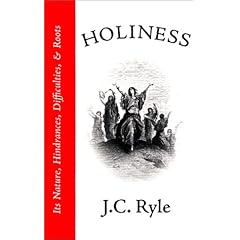
As we are made holier through the grace of God and the workings of the Holy Spirit in our lives, it is like a foretaste of heaven and the glory that is in store for us. We need the renewal of the Holy Spirit in our hearts and the atoning blood of Christ for not only justification and forgiveness of sins, but also for continuing sanctification and eventual glorification.
“What shall we say then? Are we to continue in sin that grace may abound? By no means! How can we who died to sin still live in it?”
Romans 6:1, 2
Monday, January 7, 2008
Trusting Our Creator
"My son, do not reject the discipline of the Lord,
or loathe His reproof,
For whom the Lord loves He reproves,
even as a father the son in whom he delights."
(Proverbs 3:12)
When discussing this passage on Sunday, I referred to a quotation by C.S. Lewis from "The Problem of Pain." Several people commented on this, and so I thought I would post the quotation here.
Lewis sets out to illustrate how God can both love us and yet allow (indeed, cause) troubles in our lives. He compares the painful work of God in our lives to the work of an artist:
Over a sketch made idly to amuse a child, an artist may not take much trouble: he may be content to let it go even though it is not exactly as he meant it to be. But over the great picture of his life -- the work which he loves, though in a different fashion, as intensely as a man loves a woman or a mother a child -- he will take endless trouble -- and would, doubtless, thereby give endless trouble to the picture if it were sentient. One can imagine a sentient picture, after being rubbed and scraped and recommenced for the tenth time, wishing that were only a thumbnail sketch whose making was over in a minute. In the same way, it is natural for us to wish that God had designed us for a less glorious and less arduous destiny; but then we are wishing not for more love but for less. (ch. 3)
Lewis proceeds to offer further illustrations from the relationship of a master to a pet (you really shouldn't miss that one!), a husband to a wife, and a father to a son.
During times of great pain, there are no easy answers. And we do not have to have marvelous answers. We need only to trust. God's word, and in this case Lewis's reflections on it, can help us be prepared for such times.
"For we are His workmanship..." (Ephesians 2:10a)
or loathe His reproof,
For whom the Lord loves He reproves,
even as a father the son in whom he delights."
(Proverbs 3:12)
When discussing this passage on Sunday, I referred to a quotation by C.S. Lewis from "The Problem of Pain." Several people commented on this, and so I thought I would post the quotation here.
Lewis sets out to illustrate how God can both love us and yet allow (indeed, cause) troubles in our lives. He compares the painful work of God in our lives to the work of an artist:
Over a sketch made idly to amuse a child, an artist may not take much trouble: he may be content to let it go even though it is not exactly as he meant it to be. But over the great picture of his life -- the work which he loves, though in a different fashion, as intensely as a man loves a woman or a mother a child -- he will take endless trouble -- and would, doubtless, thereby give endless trouble to the picture if it were sentient. One can imagine a sentient picture, after being rubbed and scraped and recommenced for the tenth time, wishing that were only a thumbnail sketch whose making was over in a minute. In the same way, it is natural for us to wish that God had designed us for a less glorious and less arduous destiny; but then we are wishing not for more love but for less. (ch. 3)
Lewis proceeds to offer further illustrations from the relationship of a master to a pet (you really shouldn't miss that one!), a husband to a wife, and a father to a son.
During times of great pain, there are no easy answers. And we do not have to have marvelous answers. We need only to trust. God's word, and in this case Lewis's reflections on it, can help us be prepared for such times.
"For we are His workmanship..." (Ephesians 2:10a)
Subscribe to:
Posts (Atom)